Generated with assist by CoPilot.
Beavers: North America’s Original Water Engineers
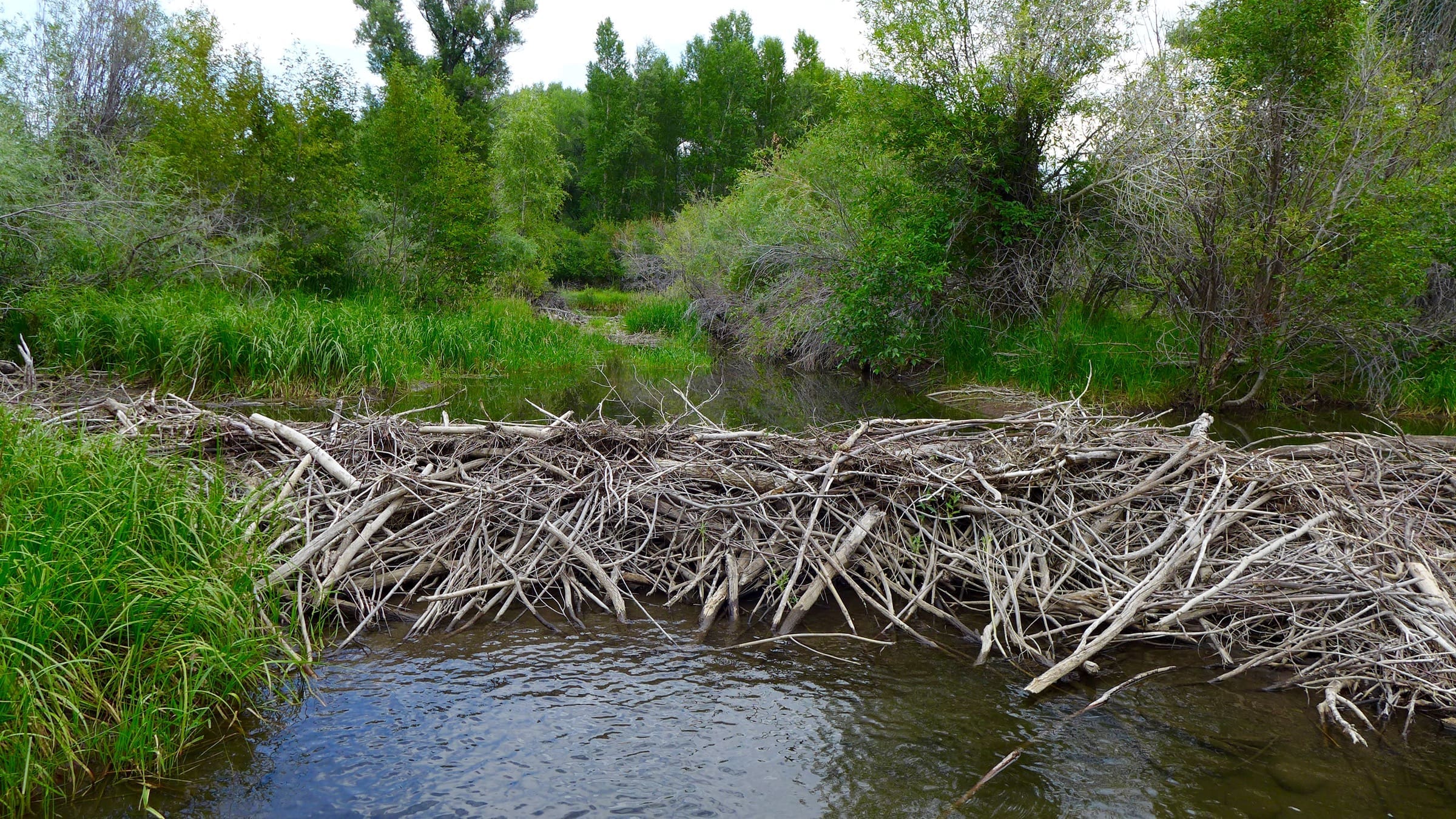
Beavers once numbered between 60–400 million across North America, shaping entire watersheds through their dams and wetlands. Their engineering slowed water, raised water tables, and created rich habitats for fish, birds, amphibians, and plants.
The fur trade of the 1600s–1800s nearly wiped them out, reducing populations to around 100,000, draining wetlands and degrading riparian ecosystems.
How the Fur Trade and Unregulated Greed Created Dry Lands
For thousands of years, beavers shaped North America’s rivers, wetlands, and floodplains. Their dams slowed water, raised water tables, and created rich, sponge‑like landscapes that stayed green even in drought. But beginning in the 1600s, the global fur trade unleashed an extraction economy that treated beavers not as ecosystem engineers, but as commodities.
Driven by European fashion markets and unregulated commercial trapping, beaver populations collapsed from an estimated 60–400 million to fewer than 100,000 by the late 1800s.
Historical context:
- Overview of the North American fur trade:
https://www.britannica.com/topic/fur-trade - Hudson’s Bay Company archives:
https://www.hbcheritage.ca - Smithsonian Magazine on the ecological impact of beaver decline:
https://www.smithsonianmag.com/science-nature/how-beavers-shape-landscapes-180975093/(smithsonianmag.com in Bing)
The ecological consequences were immediate and severe:
- Wetlands drained as abandoned dams collapsed
- Streams cut deeper channels, speeding water downstream instead of storing it
- Water tables dropped, drying out meadows and riparian zones
- Salmon and trout habitat degraded
- Fire risk increased as formerly wet valleys turned to brush and grass
- Biodiversity plummeted across entire watersheds
In short, unregulated extraction didn’t just remove an animal — it removed the keystone process that kept landscapes hydrated.
Modern satellite data from NASA confirms what Indigenous nations and early naturalists observed: when beavers disappear, the land dries out.
NASA Earth Observatory:https://earthobservatory.nasa.gov (earthobservatory.nasa.gov in Bing)
The fur trade’s legacy is still visible today in many Western valleys where streams run too fast, meadows are brittle, and water vanishes weeks earlier than it should. Restoring beavers — or building beaver‑dam analogs where they can’t return — is one of the most effective ways to reverse that damage.
The 1948 Idaho Parachute Relocation
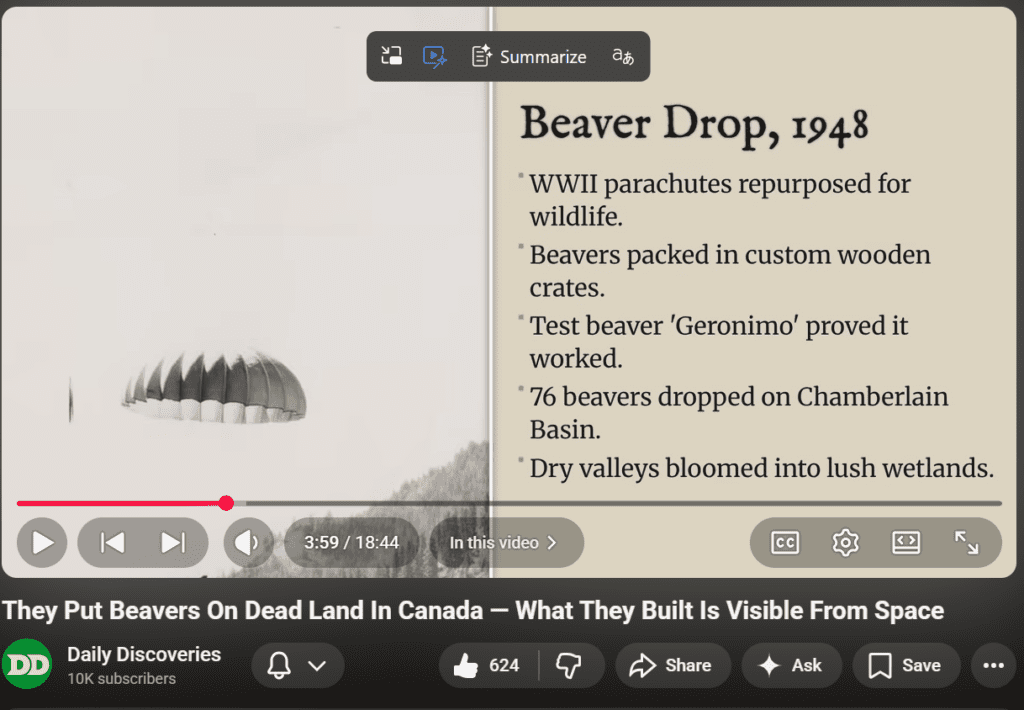
In 1948, Idaho Fish & Game launched a now‑famous relocation project using WWII parachutes to move beavers into remote wilderness.
A test beaver named Geronimo survived multiple drops.
Of the 76 beavers relocated, 75 survived and immediately began building dams.
Historical background:
- Idaho Fish & Game archival footage (public domain):
https://idfg.idaho.gov/blog/2015/09/beaver-bombs-away(idfg.idaho.gov in Bing) - Smithsonian Magazine coverage:
https://www.smithsonianmag.com/smart-news/when-idaho-parachuted-beavers-180952916/(smithsonianmag.com in Bing)
Ecological Transformation
Once reintroduced, beavers rapidly rebuilt wetlands:
- Plant diversity increased by 20–40%
- Water tables rose and streams cooled
- Trout, amphibians, and waterfowl returned
- Wetlands persisted even during drought years
NASA Landsat imagery shows decades of greening in beaver‑restored valleys:https://earthobservatory.nasa.gov (earthobservatory.nasa.gov in Bing)
Beavers as Climate Resilience Infrastructure
Drought Buffering
Beaver wetlands retain water 30–50% longer during drought (NASA ECOSTRESS & Landsat studies).
Wildfire Resistance
During the 2018 Sharps Fire in Idaho, beaver wetlands stayed green while surrounding land burned.
Peer‑reviewed study:
Fairfax, E., & Whittle, A. (2020). Ecological Applications.
https://doi.org/10.1002/eap.2191
Carbon Storage
Beaver meadows store up to 5× more carbon than undammed streams due to deep organic soils.
Global Beaver Comeback
- Canada: Wood Buffalo National Park hosts the world’s longest beaver dam (850 m).
https://earthobservatory.nasa.gov/images/145047/the-worlds-longest-beaver-dam(earthobservatory.nasa.gov in Bing) - United Kingdom: National licensing for beaver reintroduction began in 2025.
- Europe: Scotland, Wales, and the Czech Republic are restoring beaver populations for flood control and biodiversity.
Montana‑Specific Relevance
Montana’s semi‑arid basins mirror Idaho’s hydrology, making beaver‑based restoration especially effective.
Active Montana partners include:
- Montana DNRC Beaver Working Group
https://dnrc.mt.gov - Trout Unlimited (Upper Missouri Basin projects)
https://www.tu.org - Blackfoot Challenge
https://blackfootchallenge.org - Confederated Salish & Kootenai Tribes Natural Resources
https://csktribes.org
Beaver‑dam analogs (BDAs) and coexistence programs are now standard tools for drought buffering and riparian recovery.
Recommended Reading
- Beaver Restoration Guidebook (NOAA & USFWS)
https://www.fisheries.noaa.gov/resource/document/beaver-restoration-guidebook(fisheries.noaa.gov in Bing) - Eager: The Surprising, Secret Life of Beavers and Why They Matter – Ben Goldfarb
https://www.chelseagreen.com/product/eager/ - Montana Beaver Working Group Reports
https://dnrc.mt.gov
Recommended Viewing
- PBS – “Leave It to Beavers”
https://www.pbs.org/wnet/nature/leave-it-to-beavers-full-episode/8836/(pbs.org in Bing) - NASA Earth Observatory – Beaver Wetland Time‑Lapse
https://earthobservatory.nasa.gov(earthobservatory.nasa.gov in Bing) - Trout Unlimited – Beaver Mimicry Projects
https://www.youtube.com/user/TroutUnlimitedTV(youtube.com in Bing)
APA‑Style References
Bouwes, N., Weber, N., Jordan, C. E., Saunders, W. C., Tattam, I. A., Volk, C., … Pollock, M. M. (2016). Ecosystem experiment reveals benefits of natural and simulated beaver dams to a threatened population of steelhead. Scientific Reports, 6, 28581. https://doi.org/10.1038/srep28581
Fairfax, E., & Whittle, A. (2020). Smokey the Beaver: Beaver‑dammed riparian corridors stay green during wildfire throughout the western United States. Ecological Applications, 30(8). https://doi.org/10.1002/eap.2191
Hood, G. A., & Larson, D. G. (2015). Beaver-created wetlands increase plant diversity in a boreal landscape. Biological Conservation, 187, 60–66.
NASA Earth Observatory. (2023). Monitoring beaver‑driven hydrological change using Landsat time‑series. https://earthobservatory.nasa.gov (earthobservatory.nasa.gov in Bing)
Summary of video that sparked this review.
Here’s a clear, structured summary of the YouTube video at:
The video tells the full ecological story of how beavers—once nearly wiped out across North America—were reintroduced to “dead land” and went on to engineer wetlands so extensive they are now visible from space. After fur‑trade–driven collapse, landscapes dried, salmon runs faded, and wetlands vanished. In 1948, Idaho Fish & Game launched a bizarre but successful rescue: parachuting beavers into remote wilderness using WWII surplus gear. The relocated animals rebuilt wetlands, restored biodiversity, buffered drought and wildfire, and created long-term ecological resilience measurable by NASA satellites. Today, beaver‑based restoration is influencing policy across North America and Europe.
Highlights
00:00:01 Beavers once shaped entire continents
- Pre‑colonial populations reached 60–400 million.
- Their dams created wetlands that supported fish, birds, and diverse plant life.
- European fur trade rapidly collapsed populations, draining wetlands and degrading ecosystems.
00:03:20 The 1948 Idaho parachute experiment
- Beavers causing local flooding were relocated to remote wilderness.
- WWII parachutes + custom wooden crates enabled air‑dropping into inaccessible valleys.
- “Geronimo,” a test beaver, survived multiple trial drops.
- 75 of 76 parachuted beavers survived and immediately began building.
00:05:27 Rapid ecological transformation
- Formerly dry valleys became networks of ponds and wetlands.
- Vegetation diversity increased by nearly one‑third.
- Trout, ducks, frogs, and insects returned as water spread and soils stayed moist.
00:07:53 Visible from space
- NASA Landsat imagery shows decades of greening along restored creeks.
- Wetlands persist even in drought years because beaver dams store water longer.
00:12:02 Beavers as wildfire buffers
- During Idaho’s 2018 Sharps Fire, beaver wetlands stayed green while surrounding land burned.
- Wet meadows acted as natural firebreaks, protecting wildlife and firefighters.
00:14:06 NASA confirms climate resilience
- Beaver wetlands retain water 30–50% longer during drought.
- Soils store carbon up to 5× more than undammed streams.
- Satellite data now guides restoration policy.
00:15:19 Global beaver comeback
- Canada’s Wood Buffalo National Park hosts the world’s longest beaver dam (850 m).
- UK, Scotland, Wales, and Czech Republic are reintroducing beavers for flood control and biodiversity.
- Indigenous knowledge is increasingly integrated into restoration strategies.
00:18:12 Final message
- Beavers demonstrate that letting nature’s engineers work can restore ecosystems at scales humans cannot replicate.
- Their impact is now measurable from orbit.